Laughel: The Handwritten Font That Brings Authenticity to Digital Design
In a digital landscape saturated with sterile, perfectly aligned sans-serifs and rigid grid-based layouts, there is a growing hunger for something that feels human. We are living in an era where authenticity is the new currency of connection. Users no longer want to feel like they are interacting with a faceless algorithm; they crave personality, warmth, and a touch of imperfection. This is where Laughel steps in. It is not just another typeface; it is a casual and friendly handwritten font designed to bridge the gap between professional polish and genuine human expression.
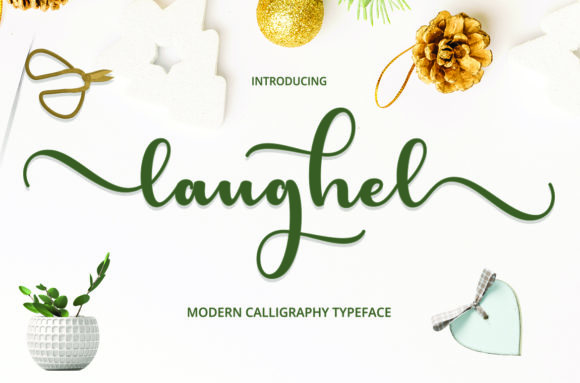
The relevance of a font like Laughel goes beyond mere aesthetics. It addresses a fundamental shift in how we consume content and conduct business today. Whether you are a freelancer crafting a personal brand, a marketer trying to cut through the noise of social media, or an educator creating engaging materials, the choice of typography plays a pivotal role in setting the tone. Laughel is a casual and friendly handwritten font that looks outstanding in any context, whether it's being used on busy backgrounds or as a standalone headline. Its unique ability to maintain legibility while exuding charm makes it a versatile tool for modern creators who understand the power of visual storytelling.
The Evolution of Typography in Modern Workflows
Typography has always been the backbone of communication, but its role has evolved significantly over the last decade. In the early days of web design, readability was the only metric that mattered. Fonts were chosen based on their ability to render clearly on low-resolution screens. Today, with high-definition displays and diverse viewing environments, the conversation has shifted toward emotional resonance. We have moved from the "one-size-fits-all" approach of Arial or Helvetica to a more nuanced understanding of brand voice.
This evolution reflects changing habits among our audience. Adults aged 20 to 50, who make up the core of the digital workforce and consumer base, are increasingly skeptical of corporate speak and overly polished marketing. They respond better to content that feels curated by a person rather than generated by a machine. A handwritten style signals effort, care, and individuality. It suggests that a real human took the time to write the message, even if it was typed out using a specialized font file.
Laughel fits perfectly into this new paradigm. It captures the spontaneity of a quick note or the creativity of a sketchbook page without sacrificing the structure needed for clear communication. As workflows become more remote and digital-first, the need for tools that foster a sense of community and connection becomes paramount. Using a font like Laughel allows businesses to inject a bit of soul into emails, landing pages, and social graphics, making digital interactions feel less transactional and more relational.
Bridging the Gap Between Professionalism and Playfulness
One of the most common challenges designers and business owners face is balancing professionalism with approachability. Too much formality can alienate potential customers, while too much informality can undermine credibility. This is where the specific characteristics of Laughel shine. It avoids the pitfalls of looking like a child's scribble or an illegible signature. Instead, it offers a refined casualness that respects the reader's intelligence while inviting them in.
Consider the scenario of a small business owner launching a new product. Their website needs to convey trust, but their Instagram captions need to feel like a chat with a friend. With a standard serif font, maintaining that balance requires constant tweaking of copy and layout. However, when Laughel is introduced, the visual language itself does the heavy lifting. It creates an immediate association with creativity and ease. It tells the viewer, "We are serious about what we do, but we don't take ourselves too seriously."
This duality is crucial for entrepreneurs and freelancers who wear many hats. They often struggle to define their brand identity because their work spans different mediums. A font that is adaptable enough to handle complex data tables yet expressive enough for a blog post title is a rare find. Laughel delivers on this front, proving that a single typeface can serve multiple purposes within a cohesive brand strategy.
Practical Applications for Creators and Professionals
The versatility of Laughel extends far beyond simple decoration. For professionals in marketing, education, and content creation, this font offers practical solutions to everyday design problems. Let's look at how different users can leverage its unique properties to enhance their output.
- Marketers and Bloggers: In an age of information overload, headlines must grab attention instantly. Laughel works exceptionally well as a standalone headline. Its organic curves draw the eye, distinguishing the content from the sea of blocky text. When used alongside body text, it acts as a visual anchor, guiding the reader through the narrative without feeling jarring.
- Educators and Trainers: Learning materials benefit immensely from a friendly aesthetic. Textbooks and slide decks that use Laughel feel less intimidating and more accessible. It reduces the cognitive load associated with dense academic material, making complex topics feel more manageable and engaging for students of all ages.
- Business Owners: For those building a personal brand, consistency is key. Laughel provides a consistent visual thread across various platforms. From email signatures to invoice headers, using the same font reinforces brand recognition. It adds a layer of personality that helps differentiate a business from its competitors who may be stuck in generic templates.
Furthermore, the technical capabilities of Laughel allow it to perform well in challenging environments. As mentioned, it looks outstanding on busy backgrounds. This is a significant advantage for social media campaigns where images are often cluttered with photos, logos, and other graphic elements. Unlike thinner fonts that might get lost against a busy backdrop, Laughel possesses enough weight and character to stand out clearly, ensuring the message remains legible regardless of the visual chaos behind it.
Integrating Laughel into Your Design Strategy
Implementing Laughel into your projects doesn't require a complete overhaul of your design system. Start small. Try replacing a standard button label with a phrase in Laughel to see how it changes the user's perception of the call-to-action. Or, use it for pull quotes in a long-form article to break up the monotony of the text. These subtle shifts can have a cumulative effect on user engagement and retention.
It is also important to consider the pairing aspect. While Laughel is strong on its own, it often pairs beautifully with clean, neutral sans-serif fonts for body text. This combination leverages the strengths of both: the clarity and readability of the sans-serif ensures the content is easy to digest, while the handwritten nature of Laughel adds the necessary flair and emotional depth. This hybrid approach is becoming a staple in modern web design, reflecting the desire for efficiency without sacrificing style.
Looking Ahead: The Future of Human-Centric Design
As we move further into the future, the line between digital and physical experiences will continue to blur. Technologies like augmented reality and AI-generated content are becoming commonplace. In this context, the value of human-made artifacts increases. A font like Laughel represents a deliberate choice to embrace human imperfection. It is a rejection of the hyper-perfect, synthetic world in favor of something that feels lived-in and authentic.
For professionals and hobbyists alike, adopting a font like Laughel is a statement about values. It signals a commitment to connecting with people on a deeper level. It acknowledges that while technology can speed up our workflows, it cannot replicate the nuance of human interaction. By choosing a font that mimics the stroke of a pen, we invite our audience to slow down and appreciate the craft behind the content.
The trend towards personalized and experiential design is not going away. Businesses that fail to adapt to this shift risk appearing outdated and disconnected. Those who embrace tools that allow for greater expression and flexibility will thrive. Laughel offers a pathway to achieve this, providing a reliable and effective way to infuse personality into digital products. Whether you are designing a brochure for a local workshop or a global campaign for a tech startup, the principles of human-centric design remain the same.
Ultimately, the success of a design project depends on how well it communicates its intended message. Laughel serves as a powerful ally in this endeavor. It is a casual and friendly handwritten font that understands the nuances of modern communication. It looks outstanding in any context, whether it's being used on busy backgrounds or as a standalone headline. By integrating Laughel into your workflow, you are not just selecting a typeface; you are choosing to communicate with warmth, clarity, and a distinct human touch. In a world that is increasingly automated, that human touch is more valuable than ever before.