Madelena Script Font Evaluation
The landscape of digital typography offers a vast array of options for designers, yet finding a typeface that balances elegance with technical utility can be challenging. Madelena is a modern script font designed to bridge this gap. It presents itself as a stylish and feminine option suitable for various applications, from personal projects to professional branding. Understanding the specific characteristics of Madelena is essential for anyone considering it for their next design initiative.
This evaluation explores the functional aspects of the Madelena typeface, examining its encoding structure, visual appeal, and practical applications. The goal is to provide a clear picture of how this font performs in real-world scenarios, helping users determine if it aligns with their specific project requirements.
Understanding the Madelena Typeface
Madelena is classified as a modern script font. Unlike traditional calligraphy scripts that mimic hand-painted lettering with heavy pressure variations, modern scripts often feature more consistent stroke widths and cleaner lines while retaining a fluid, connected flow. This style allows Madelena to maintain readability even at smaller sizes, a common limitation in many decorative typefaces.
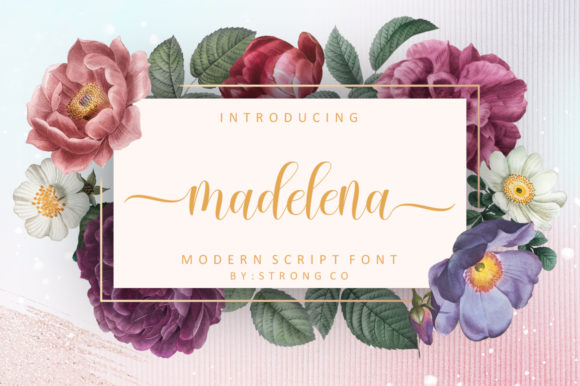
The aesthetic profile of Madelena is distinctly feminine and stylish. The letterforms are crafted to evoke a sense of grace and sophistication. This makes the font particularly effective in contexts where a soft, inviting, or romantic tone is desired. However, the "modern" classification suggests that it also possesses a level of refinement that fits contemporary design trends, preventing it from appearing overly vintage or dated.
The Importance of PUA Encoding
A critical technical feature of Madelena is its use of Private Use Area (PUA) encoding. In standard font development, character sets are limited by Unicode standards. When a font includes numerous swashes, ligatures, and alternate glyphs, they often exceed these standard slots. To circumvent this, developers map these additional characters to the PUA section of the font file.
For the end-user, this means that accessing the full range of Madelena's features requires specific software support. Modern design tools like Adobe Illustrator, Photoshop, and InDesign have robust OpenType support that automatically detects and renders PUA-encoded glyphs when appropriate contextual rules are met. This ensures that all swashes and alternates are accessible with ease within professional workflows.
However, users must be aware that PUA fonts may not display correctly in environments lacking advanced OpenType handling, such as older web browsers without CSS font-feature activation or basic text editors. For print and high-end graphic design, this is rarely an issue, but it is a consideration for web deployment.
Primary Applications and Use Cases
Due to its stylistic attributes, Madelena finds its strongest footing in specific categories of design work. Its ability to convey emotion through form makes it a preferred choice for events and personal correspondence.
- Wedding Invitations: The feminine and elegant nature of the script makes it a natural fit for wedding stationery. It pairs well with floral motifs and minimalist layouts commonly found in modern weddings.
- Thank You Cards and Greeting Cards: For personal messages, the handwritten quality of Madelena adds a touch of intimacy and care that block letters cannot achieve.
- Quotes and Social Media Graphics: Short phrases or inspirational quotes benefit from the fluidity of the script. The legibility of the modern style ensures the message remains clear even when overlaid on complex backgrounds.
- Logos and Branding: While script fonts require careful handling in logo design, Madelena offers a balance between uniqueness and professionalism. It is suitable for boutique brands, beauty salons, or lifestyle businesses targeting a female demographic.
- Business Cards: When used for contact information or names, Madelena can elevate a business card from standard to premium. However, it should be paired with a neutral sans-serif for secondary details to ensure contact data remains legible.
Benefits and Tradeoffs
When evaluating any typeface, it is necessary to weigh the advantages against potential limitations. Madelena offers distinct benefits, but like all specialized fonts, it comes with tradeoffs that designers must manage.
Key Benefits
The primary advantage of Madelena is its versatility within the niche of feminine design. It avoids the cluttered look of some elaborate calligraphy fonts while maintaining a high degree of style. The inclusion of extensive swashes and alternates via PUA encoding provides significant creative freedom. Designers can adjust the weight and personality of individual words without changing the font family, allowing for dynamic compositions.
Furthermore, the modern construction of the letterforms aids in readability. Many script fonts sacrifice clarity for ornamentation, but Madelena retains enough structural integrity to be read quickly, which is crucial for marketing materials and invitations.
Potential Limitations
The most significant constraint is the reliance on PUA encoding. If a client or recipient opens a document in a program that does not recognize the PUA mapping, the text may appear as garbled symbols or fallback to a default serif font. This necessitates strict workflow protocols, such as outlining text before final delivery or ensuring all collaborators use compatible software.
Additionally, the "feminine" styling limits its applicability. While subjective, the font may feel out of place in industries requiring a more masculine, industrial, or strictly corporate tone. Overuse of stylized scripts can also lead to visual fatigue if the background is too busy or if the font size is too small.
Decision-Making Insights
Selecting Madelena should be driven by the specific goals of the project rather than trendiness alone. Designers should ask themselves if the emotional resonance of the font matches the brand voice or event theme.
If the objective is to create a connection based on elegance, warmth, or celebration, Madelena is a strong candidate. It excels in scenarios where the text serves as a focal point and where the audience expects a certain level of polish and artistry.
Conversely, if the project demands maximum accessibility across all devices, or if the content is dense and informational, alternatives might be preferable. Sans-serif typefaces or more neutral serif fonts offer better scalability and neutrality for body copy. In cases where the design needs to be universally accessible without relying on specific OpenType features, a standard Unicode font is safer.
Evaluating Alternatives
While Madelena is a robust option, it is part of a larger ecosystem of script fonts. Designers should consider other modern scripts if they require different x-heights, stroke contrasts, or cultural aesthetics. Some alternatives may offer better web-font licensing structures or broader Unicode support, eliminating the need for PUA workarounds. Comparing the specific glyph set of Madelena against competitors is advisable to ensure the available swashes meet the design vision.
Conclusion
Madelena stands out as a capable modern script font that successfully combines stylistic flair with functional design. Its PUA encoding unlocks a rich vocabulary of swashes and alternates, making it a powerful tool for creating custom, high-end designs. For professionals working on wedding invitations, greeting cards, logos, and branding materials that target a sophisticated audience, Madelena offers a reliable and attractive solution.
However, success with this font depends on understanding its technical requirements. Proper software management is essential to leverage the PUA features effectively. By balancing the aesthetic strengths of the typeface with practical considerations regarding encoding and application, designers can make informed decisions that result in polished and effective visual communication.