Khiara Font Evaluation: A Comprehensive Guide for Designers
In the competitive landscape of visual communication, typography serves as a critical differentiator. When designers seek to inject personality and elegance into a project, the choice of typeface often dictates the success of the final output. Khiara has emerged as a notable option in this sector, specifically targeting projects that require a sophisticated handwritten aesthetic. This evaluation explores the technical specifications, practical applications, and strategic considerations necessary to determine if Khiara aligns with your specific design goals.
Understanding the Khiara Typeface
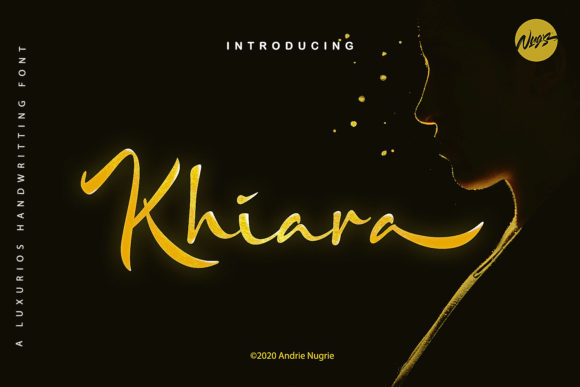
Khiara is categorized as a luxury and fashionable handwritten font. Unlike standard sans-serif or serif typefaces that prioritize readability through uniformity, Khiara mimics the fluid motion of calligraphy while maintaining structural integrity suitable for modern branding. The character of the font is defined by its stylish curves and variable stroke widths, which create an impression of exclusivity and high-end craftsmanship.
The primary technical feature that distinguishes Khiara from many other display fonts is its PUA (Private Use Area) encoding. In digital typography, the PUA allows designers to access extended character sets without relying on external plugins or complex workarounds. For Khiara, this means that all unique glyphs, alternate characters, and decorative swashes are fully accessible within standard software environments. This encoding ensures that the full artistic potential of the font can be utilized seamlessly across various design platforms, reducing technical friction during the creation process.
Strategic Applications and Use Cases
Selecting a font requires matching the visual language of the typeface to the intended message. Khiara is not a utility font designed for long-form body text; rather, it excels in contexts where impact and style are paramount. Below are the primary scenarios where Khiara proves to be a strong fit.
- Stylish Branding and Logo Projects: For businesses aiming to project an image of sophistication, such as boutique fashion labels, artisanal food products, or luxury lifestyle services, Khiara provides an immediate sense of premium quality. Its handwritten nature adds a human touch that mass-produced logos often lack.
- Product Packaging: On shelves crowded with competing goods, packaging needs to stand out. Khiara's distinct letterforms can create memorable brand identities on labels, tags, and boxes, particularly for products that emphasize handcrafted origins or limited editions.
- Editorial Design and Invitations: In the realm of print media, editorial layouts often benefit from the organic feel of a script font. Khiara is well-suited for magazine headers, cover lines, and event invitations where a personal, elegant tone is required.
- Greetings and Quotes: The font's decorative swashes make it ideal for greeting cards, social media graphics featuring quotes, and promotional banners that rely on emotional resonance rather than informational density.
Benefits of Using Khiara
When evaluating Khiara against other handwritten options, several distinct advantages become apparent. The most significant benefit is the accessibility of its glyph set. Because the font utilizes PUA encoding, designers do not need to navigate complex OpenType features manually or worry about missing characters when attempting to use specific swashes. This streamlines the workflow, allowing for faster iteration and experimentation.
Furthermore, the aesthetic versatility of Khiara supports a wide range of "luxury" themes. Whether the goal is to evoke old-world charm or modern minimalism, the font's structure allows for adaptation. The balance between its handwritten flair and legible form makes it usable in both large display sizes and medium-sized headlines, provided the context remains appropriate.
Tradeoffs and Considerations
While Khiara offers distinct stylistic benefits, there are inherent tradeoffs that designers must consider before committing to it for a project. The most critical limitation is legibility at small scales. Like most script and handwritten fonts, Khiara loses clarity when reduced below a certain point. It is unsuitable for fine print, legal disclaimers, or any interface element requiring rapid scanning.
Another consideration is consistency. Handwritten fonts inherently possess variations in stroke weight and angle. While this adds character, it can sometimes lead to uneven spacing or alignment issues if not managed carefully. Designers must pay close attention to kerning and tracking to ensure the text does not appear cluttered or disjointed. Additionally, because the font relies on PUA encoding, compatibility with older versions of design software or specific web browsers may require testing to ensure the glyphs render correctly.
When to Consider Alternatives
Determining whether to use Khiara involves assessing whether its specific strengths match the project requirements. There are situations where alternative typefaces would be more effective.
- High-Volume Text Requirements: If a project involves long paragraphs of body copy, a dedicated serif or sans-serif font is a better choice. These typefaces offer superior readability over extended reading distances and reduce eye strain.
- Corporate and Technical Contexts: For industries such as finance, law, or technology, the casual elegance of Khiara may undermine the perceived authority and stability of the brand. In these cases, geometric sans-serifs or traditional serifs are more appropriate.
- Multi-language Support: While PUA encoding provides extensive glyphs, it is essential to verify if the font supports the specific languages required for the project. Some handwritten fonts have limited character sets for non-Latin scripts or specialized diacritics.
Practical Decision-Making Insights
To decide if Khiara is the right tool for your next project, start by defining the core objective of the design. Ask yourself if the goal is to create an emotional connection or to convey data efficiently. If the former, Khiara is a compelling candidate. However, if the priority is information hierarchy and speed of reading, you should look toward more neutral typefaces.
It is also advisable to test the font in its intended environment. Create mockups of the logo, packaging, or invitation using Khiara alongside your chosen secondary typeface. Observe how the swashes interact with the layout and whether the PUA characters function as expected in your production pipeline. This practical testing phase will reveal any potential conflicts between the font's style and the functional constraints of the project.
Ultimately, Khiara represents a specialized solution for designers seeking a blend of luxury and handwriting. Its PUA encoding removes technical barriers, allowing the focus to remain on creative expression. By understanding its limitations regarding legibility and context, designers can leverage Khiara effectively to elevate branding, packaging, and editorial designs without compromising usability.